Total Outdoor Transformation Engineered By Premium Tree Services in Russell

Total Outdoor Transformation Engineered By Premium Tree Services in Russell

When property owners in Russell invest in their outdoor environments, they are often seeking more than simple curb appeal. They are looking for structural integrity, safety, and long-term value that withstands the demanding Canadian climate. The trees that surround a home or commercial property represent living assets that require professional management. Without proper care, these majestic elements can transform from assets into liabilities. This is where comprehensive tree services in Russell become essential to preserving both property value and personal safety.

At Nick’s Landscaping Depot, we have developed a systematic approach to arboricultural care that integrates the latest industry standards with local environmental knowledge. Our mission is to deliver outdoor transformations that enhance property aesthetics while ensuring long-term tree health. The unique growing conditions in the Ottawa Valley, combined with the seasonal extremes of Eastern Ontario, demand a specialised understanding of tree biology, soil composition, and structural mechanics.

Understanding the Value of Professional Tree Management

Many property owners underestimate the complexity involved in maintaining a healthy urban forest. Trees are dynamic organisms that respond to environmental stressors, soil conditions, and seasonal changes. In Russell, we encounter a diverse range of species including sugar maples, white pines, red oaks, and eastern white cedars. Each species presents unique challenges and requirements. When you engage professional tree services, you gain access to certified arborists who understand these species-specific needs.

Risks of Poorly Maintained Trees

Poorly maintained trees pose significant risks to structures, vehicles, and human safety. Consider these potential consequences:

  • Falling branches during winter ice storms can cause catastrophic damage to roofs and power lines
  • Compromised root systems can undermine foundations and driveway surfaces
  • Diseased trees become breeding grounds for pests that spread to neighbouring properties
  • Structural weakness leads to sudden failure without warning
  • Overgrown canopies block sunlight and inhibit lawn and garden growth
  • Dead or dying trees attract wood-boring insects that can spread to healthy specimens

Comprehensive Tree Care Solutions for Russell Properties

Our tree services encompass a complete spectrum of arboricultural solutions. From initial consultation through to ongoing maintenance, we develop tailored programs that address the specific needs of each property. Tree pruning is perhaps the most misunderstood aspect of tree care. Improper pruning techniques can cause irreparable damage to tree structure, leading to decay, disease, and eventual tree failure.

Our certified arborists employ industry-approved methods including:

  • Crown Cleaning: Selective removal of dead, diseased, or broken branches to improve tree health
  • Crown Thinning: Reducing branch density for increased light penetration and air movement
  • Crown Raising: Providing clearance for buildings, vehicles, and pedestrian traffic
  • Crown Reduction: Decreasing overall tree size to reduce wind load and stress on root systems

Health Assessment and Disease Prevention

Regular health assessments identify potential issues before they become serious problems. Our arborists evaluate:

  • Overall tree vigour and growth patterns
  • Evidence of pest infestation or disease
  • Soil conditions and nutrient deficiencies
  • Structural integrity and risk factors
  • Root health and stability

Emergency Tree Services for Storm Damage

Eastern Ontario experiences severe weather events throughout the year. Heavy snow loads, ice accumulation, and high winds can cause sudden tree failure. Our emergency tree services in Russell are available around the clock. When a tree has fallen onto a structure, blocked a driveway, or created a hazardous situation, immediate response is essential. Our team arrives with the equipment and expertise necessary to assess the situation, stabilise the hazard, and execute a safe removal.

Post-Storm Assessment

The aftermath of a storm often reveals hidden damage that may not be immediately apparent. Cracks, split branches, and root damage can compromise tree stability long after the storm has passed. Our comprehensive assessment identifies these potential hazards before they become emergencies. Prevention remains the most effective approach to storm damage. Proactive maintenance significantly reduces the risk of catastrophic failure during severe weather events.

When Tree Removal and Stump Grinding Becomes Necessary

While preservation is always our primary objective, there are circumstances where tree removal becomes the safest and most practical solution:

  • Trees suffering from extensive disease or decay.
  • Severe structural damage compromising stability.
  • Trees in irreversible decline.
  • Hazardous lean toward structures or power lines.
  • Root damage affecting foundations or underground utilities.
  • Trees interfering with construction or development projects.

Professional Removal Process

Our tree removal process is carefully planned to minimise disruption to your property. We obtain necessary permits, protect surrounding vegetation, and ensure safe dismantling of even the most challenging specimens. Stump grinding follows every removal, eliminating tripping hazards and visual eyesores. We also offer stump grinding as a standalone service for properties where trees have previously been removed. This service allows for immediate replanting or lawn restoration without the unsightly remnants of previous trees.

Planting and Establishment Services

A sustainable approach to tree management includes thoughtful replanting. Our arborists help Russell property owners select appropriate species for their specific conditions:

  • Soil type and drainage characteristics
  • Available space and mature size considerations
  • Sun exposure and microclimate conditions
  • Aesthetic preferences and property design
  • Native species that support local ecosystems

Establishment Support

We source high-quality nursery stock and employ proper planting techniques that promote healthy establishment and long-term growth. Proper planting depth, appropriate staking, and adequate watering are critical to establishment success. Our tree services include ongoing monitoring during the critical first two years following planting. This ensures that young trees develop strong root systems and become self-sufficient members of the landscape.

Common Threats to Russell Trees

Russell’s trees face threats from numerous pests including the emerald ash borer, gypsy moth, and various fungal pathogens. Our approach to pest management emphasises prevention and environmentally responsible intervention. We conduct regular inspections to detect pest activity at its earliest stages. When treatment is necessary, we employ targeted applications that minimise environmental impact while protecting tree health.

Holistic Management Approach

Tree health assessments form the foundation of our integrated pest management programs. We evaluate overall tree vigour, identify stress factors that increase susceptibility to pests, and develop management plans that address root causes rather than simply treating symptoms. This holistic approach results in healthier, more resilient trees that better withstand pest pressure.

The Canadian Context for Tree Care

Tree care in Canada is governed by various regulations and standards. According to the Canadian Forest Service, maintaining urban forests provides substantial environmental, social, and economic benefits. We adhere to all applicable federal, provincial, and municipal regulations, including those established under the Forestry Act and associated provincial legislation. 

Seasonal Considerations

Canadian winters present unique challenges for tree care. Our services are adapted to address:

  • Winter damage assessment and prevention
  • Ice storm preparation and response
  • Dormant season pruning advantages
  • Spring thaw soil management
  • Summer drought stress mitigation
  • Autumn leaf and debris management

Conclusion

The transformation of your Russell outdoor space requires expertise, equipment, and dedication. At Nick’s Landscaping Depot, we deliver comprehensive tree services property owners can trust. From preventive maintenance through emergency response and complete landscape renovation, our certified arborists and skilled technicians provide quality workmanship on every project. Contact us for a consultation on your tree care needs. Let us partner with you in creating outdoor environments that are safe, beautiful, and sustainable for generations to come.
Choose the Right Landscaping Supplies for a Lush Lawn and Long-Term Savings

Most lawns don’t struggle because homeowners picked the wrong grass seed. 

They struggle because the ground underneath was never prepared with the right landscaping supplies. 

The difference often comes down to one material: topsoil. Choose it wisely, and you’ll give your lawn a stronger start while avoiding costly repairs later. 

In this guide, you’ll learn why topsoil matters, how much you’ll need, and how to make smarter buying decisions. If you’re planning a complete outdoor project, explore our landscaping supplies for everything you need.

Why Topsoil Is One of the Most Important Landscaping Supplies for New Lawns

Most people judge a lawn by what they see after the first mow.

The colour. The thickness. Those clean stripes across the yard.

People who work with lawns look somewhere else entirely. They look at the ground underneath because that’s usually where future problems begin.

We’ve seen brand-new lawns look fantastic for the first few weeks, only to thin out after the first stretch of hot weather. Not because the grass seed failed. The soil underneath simply couldn’t support healthy roots.

That’s why topsoil remains one of the most important landscaping supplies for establishing a new lawn. It gives grass the environment it needs to grow deeper roots, access moisture more consistently, and recover better from heat, foot traffic, and changing weather.

Good topsoil gives your lawn a better chance because it:

  • Gives young roots room to spread instead of fighting compacted ground.
  • Holds moisture long enough for grass to use it without staying waterlogged.
  • Creates a smoother surface before bumps and low spots become permanent.
  • Supplies organic matter that encourages healthier growth.
  • Helps new grass establish before weeds take over bare areas.

You only get one opportunity to build the foundation before the grass covers it. It’s much easier to invest in quality topsoil now than to wonder next summer why certain patches never seem to catch up.

How Quality Topsoil Helps Build a Healthier Lawn

Two loads of topsoil can look almost identical sitting in the driveway.

Once they’re spread across your yard, the differences become much harder to ignore.

If you’ve ever watched water sit on a lawn long after the rain stopped, you’ve seen what heavy soil can do. On the other hand, soil that’s too sandy can dry out so quickly that keeping new grass alive feels like a full-time job. Some lower-quality topsoil may even contain rocks, roots, or leftover construction debris that makes establishing a lawn far more difficult than it needs to be.

Healthy lawns like consistency.

Roots need moisture when they need it, air when they need it, and room to grow. Quality topsoil helps create those conditions from day one, giving your lawn a stronger foundation instead of forcing it to fight through poor soil.

When comparing landscaping supplies, don’t focus only on price. Take a closer look at:

  • Soil texture and consistency.
  • Organic matter content.
  • Proper screening to remove large debris.
  • Uniform quality throughout the load.
  • Whether the topsoil is intended for lawn establishment rather than general fill.

Homeowners often remember the price they paid for topsoil. They remember poor-quality soil even longer because they’re reminded every time the same bare spots come back.

The Government of Canada also recognizes healthy soil as an important part of sustainable plant growth and landscape performance, reinforcing the value of starting every planting project with suitable soil conditions.

How Much Topsoil Do You Need for a New Lawn?

Almost every first-time lawn project reaches the same question.

How much topsoil do I actually need?

The answer depends less on the size of your yard and more on what’s already underneath it.

A property with healthy existing soil usually needs less topsoil than a newly built home where heavy equipment has compacted the ground and stripped away much of the original surface. We’ve seen homeowners order enough grass seed for a beautiful lawn, only to realize too late they didn’t order enough soil to support it.

As a general guide:

  • Existing lawns that need improvement usually require a thinner layer of topsoil.
  • New lawn installations often benefit from a deeper layer to encourage stronger root development.
  • Compacted or poorly drained areas may need additional preparation before topsoil is added.

Buying too little often leads to uneven coverage and inconsistent growth. Buying far too much adds unnecessary cost without improving the result.

Taking accurate measurements before ordering your landscaping supplies helps you purchase the right amount the first time, saving both time and money while giving your new lawn the best possible start.

Continue to Part 2, where we’ll explain how much topsoil is in a yard, where to buy topsoil in bulk, and the common mistakes homeowners should avoid when purchasing landscaping supplies.

How Much Topsoil Is in a Yard?

People often ask for “a yard” of topsoil without knowing what that actually means.

In landscaping, a yard refers to one cubic yard of material. That equals 27 cubic feet. While that number is useful, what homeowners usually want to know is how much ground it will actually cover.

The answer depends on how deep you’re spreading it.

As a general rule:

  • A cubic yard covers about 324 square feet at a depth of 1 inch.
  • It covers about 162 square feet at 2 inches.
  • It covers about 108 square feet at 3 inches.

Those numbers provide a helpful starting point, but every property is different.

We’ve seen homeowners measure the length and width of their yard perfectly, only to forget about slopes, tree roots, existing garden beds, or areas that need extra soil to correct low spots. Those details can quickly change how much topsoil your project requires.

If you’re unsure, it’s always better to discuss your project before placing an order. A few extra minutes spent calculating now can save you from paying for another delivery later.

Where to Buy Topsoil in Bulk

Not all bulk topsoil is created equal.

One supplier may sell screened topsoil intended for lawn establishment. Another may sell general fill that’s better suited for grading than growing grass. They might look similar in the truck, but you’ll notice the difference once your lawn starts growing.

When choosing where to buy topsoil in bulk, look for a supplier that can explain exactly what they’re selling instead of simply quoting a price.

A reliable supplier should be able to tell you:

  • Whether the topsoil is screened.
  • What applications it’s recommended for.
  • How much material your project is likely to require.
  • Whether bulk delivery is available.
  • Which other landscaping supplies you’ll need to complete the project.

Price always matters.

Value matters more.

Saving a few dollars on lower-quality soil rarely feels like a bargain when you’re reseeding bare patches the following season.

If you’re unsure where to start, working with a local supplier like Nick Landscaping Depot can make the process easier. Getting clear answers about materials, quantities, and delivery options upfront helps ensure your project starts on the right footing.

Common Mistakes Homeowners Make When Buying Landscaping Supplies

Very few lawn projects fail because someone bought grass seed from the wrong brand.

Most problems begin much earlier.

After supplying landscaping materials for countless outdoor projects, the same mistakes tend to appear again and again.

Buying Based on Price Alone

The cheapest load isn’t always the best value.

Poor-quality topsoil can create years of frustration, while quality material often pays for itself through healthier, more consistent lawn growth.

Guessing How Much Topsoil You Need

Ordering without accurate measurements usually ends one of two ways.

You either run out halfway through the project or you’re left with a pile of unused soil that wasn’t necessary in the first place.

Forgetting the Rest of the Project

A successful lawn rarely depends on topsoil alone.

Grass seed, compost, fertilizer, mulch for surrounding beds, and other landscaping supplies all work together to create a healthier finished landscape.

Planning the entire project before ordering materials usually saves both time and money.

Choosing the Wrong Material

Topsoil, garden soil, and fill all serve different purposes.

Using one in place of another often leads to disappointing results. Asking questions before purchasing is far easier than correcting mistakes after everything has been spread across the yard.

Start with the Right Foundation

The best-looking lawns rarely happen by accident.

They’re built from the ground up.

While grass gets most of the attention, the real investment sits underneath it. Quality topsoil gives new roots the environment they need to establish, grow stronger, and stay healthier through changing seasons. Combined with the right landscaping supplies, it creates a foundation that continues paying off long after the first mow.

If you’re planning a new lawn, take the time to choose materials that match your project instead of settling for whatever happens to be available. Your lawn will only perform as well as the foundation beneath it, and that’s one decision you’ll appreciate for years to come.

About Nick Landscaping Depot

At Nick Landscaping Depot, we believe every exceptional landscape begins with the right foundation. From premium topsoil and mulch to aggregates, stone, and other quality landscaping supplies, we provide the materials homeowners and contractors trust to bring outdoor projects to life. Whether you’re building a new lawn or transforming your property, our team is committed to helping you choose the right products with confidence.

Contact Nick Landscaping Depot

Planning your next landscaping project? Contact Nick Landscaping Depot for expert guidance, quality landscaping supplies, and dependable bulk delivery. Our knowledgeable team is ready to help you select the right materials to achieve lasting results, from the ground up.

Prepare Healthier Garden Beds Using the Right Landscaping Supplies

Every spring, people spend hours choosing the perfect plants. The soil usually becomes an afterthought. By midsummer, that’s often the part they wish they’d spent more time on. 

Choosing the right landscaping supplies gives your garden the foundation it needs to grow stronger, healthier, and with fewer setbacks. In this guide, you’ll learn how to prepare garden beds properly, choose the right materials, and avoid common mistakes. 

If you’re planning your project, explore our landscaping supplies to get started.

Why Great Garden Beds Start Before You Plant Anything

One conversation happens almost every weekend.

Someone arrives with a cart full of flowers, shrubs, or vegetable plants, then asks what soil they should buy.

The better question is usually the other way around.

What you’re planting matters. But where you’re planting it matters even more.

A garden bed doesn’t suddenly become healthy because new plants go into it. If the soil underneath is compacted, lacking organic matter, or drains poorly, even the healthiest plants spend more time surviving than growing.

That’s why experienced gardeners put as much thought into the ground as they do the plants. The right landscaping supplies create conditions where roots can spread naturally, moisture stays available longer, and plants establish themselves with far less stress.

A properly prepared garden bed helps because it:

  • Gives roots loose, healthy soil to grow into.
  • Holds moisture more evenly between watering.
  • Improves airflow beneath the surface.
  • Encourages stronger, more consistent growth.
  • Reduces the stress plants experience during hot weather.

The flowers usually get the compliments.

The soil is what made them possible.

Choosing the Right Landscaping Supplies for Different Garden Beds

One of the biggest surprises for homeowners is discovering that one type of soil doesn’t work for every project.

A vegetable garden asks for something different than a flower border. Raised beds behave differently than gardens planted directly into the ground. Even two garden beds on the same property can need different materials because one holds water while the other dries out too quickly.

That’s why the first question shouldn’t be, “Which soil is best?”

It should be, “What are you trying to grow?”

The answer usually determines which landscaping supplies will give you the best results.

For most garden bed projects, you’ll likely use a combination of materials:

  • Topsoil to improve depth and create a stronger planting foundation.
  • Garden soil where nutrient-rich growing conditions are needed.
  • Compost to improve soil structure and replenish organic matter.
  • Mulch to help the soil underneath retain moisture while reducing weed growth.

Each product has a specific job.

When they’re matched to the project instead of treated as interchangeable, gardens become easier to maintain and far more rewarding throughout the growing season.

Why Good Soil Matters More Than Expensive Plants

Every garden centre fills with beautiful plants each spring.

They all look healthy.

They all look ready to grow.

A few months later, some are thriving while others are struggling despite receiving the same amount of sunlight and water.

That’s rarely a coincidence.

Healthy roots solve problems long before they appear above the ground. Plants growing in well-prepared soil develop stronger root systems, making them better equipped to handle dry weather, temperature swings, and the everyday stress of a growing season.

People often replace plants when they’re disappointed with a garden.

Replacing the soil would have solved the problem more often than they realize.

When choosing landscaping supplies, think beyond what you’ll see after planting day. The real investment isn’t the flowers, shrubs, or vegetables you bring home. It’s the growing environment they’ll depend on for years to come.

The Government of Canada also recognizes healthy soils as an important part of sustainable plant growth and long-term environmental stewardship, reinforcing why proper soil preparation should never be overlooked.

Continue to Part 2, where we’ll compare topsoil, garden soil, and compost, explore common garden bed preparation mistakes, and help you choose the right landscaping supplies for long-lasting results.

Topsoil vs. Garden Soil vs. Compost: What’s the Difference?

This is one of the most common questions homeowners ask.

It’s also where many garden projects start heading in the wrong direction.

These products often sit beside each other in a landscape yard, so it’s easy to assume they all do the same thing.

They don’t.

Each one solves a different problem.

  • Topsoil builds the foundation. It’s commonly used to improve grade, add depth, and prepare new planting areas.
  • Garden soil is blended for planting. It provides a nutrient-rich environment for flowers, vegetables, shrubs, and other garden plants.
  • Compost improves existing soil by adding organic matter, encouraging healthier soil structure, and supporting long-term plant growth.

Think of them as a team rather than competing products.

The best garden beds rarely rely on just one material. They perform well because each landscaping supply is used where it delivers the greatest benefit.

Common Garden Bed Preparation Mistakes

Most struggling gardens can be traced back to a handful of preventable mistakes.

The frustrating part?

They’re usually made before the first plant even goes into the ground.

Planting Without Improving the Soil

Fresh plants can’t solve tired soil.

If the existing ground is compacted, lacking nutrients, or drains poorly, adding new flowers simply covers the problem instead of fixing it.

Skipping Organic Matter

Many homeowners focus on what the soil looks like.

Plants care far more about what’s happening beneath the surface.

Adding compost improves soil structure, helps regulate moisture, and creates better growing conditions over time.

Applying Too Little Mulch

Mulch is often treated as the finishing touch.

It’s much more than that.

A proper layer helps reduce moisture loss, slows weed growth, and protects the soil from drying out during the hottest weeks of summer.

Buying Everything Separately

A successful garden bed is rarely built with one product.

Topsoil, garden soil, compost, and mulch all have different jobs. Planning the entire project before ordering your landscaping supplies makes the installation smoother and often prevents unnecessary trips back to the supplier.

Build a Garden That Gets Better Every Season

The gardens people admire the most usually aren’t the ones with the most expensive plants.

They’re the ones that continue looking healthy year after year.

That doesn’t happen because of luck.

It happens because the foundation was prepared properly from the beginning.

Choosing the right landscaping supplies gives every plant a stronger place to grow, reduces ongoing maintenance, and helps your investment last well beyond a single season. Healthy soil rewards you every time new growth appears, every time flowers bloom, and every time vegetables produce the way they should.

When you build the garden bed first, the plants spend less time surviving and more time doing exactly what you planted them to do.

About Nick Landscaping Depot

At Nick Landscaping Depot, we believe thriving landscapes begin with quality materials and practical advice. From topsoil and garden soil to compost, mulch, stone, and aggregates, we supply homeowners and contractors with dependable landscaping supplies for projects of every size. Whether you’re refreshing a single garden bed or transforming an entire property, we’re here to help you choose the right materials with confidence.

Contact Nick Landscaping Depot

Planning a new garden bed or outdoor project? Contact Nick Landscaping Depot for expert guidance, premium landscaping supplies, and dependable bulk delivery. Our team is ready to help you select the right products so your landscape starts with the strongest possible foundation.

Same Day Landscape Logistics Mastered By Our Premium Material Delivery in Russell

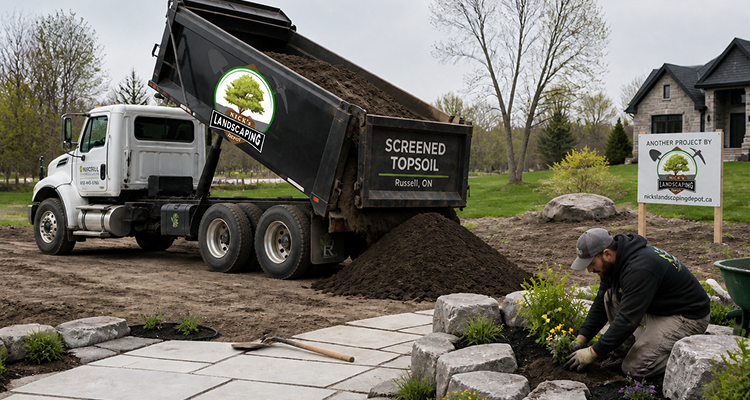
For landscaping professionals operating across the Ottawa Valley and the greater Russell region, the difference between a project completed on schedule and one that spirals into costly delays often comes down to a single variable, material supply chain reliability. When you are managing excavation contracts, hardscape installations, or seasonal lawn renovations, the inability to secure aggregate, topsoil, or decorative stone at the precise moment of need creates a cascade of inefficiencies that erode both profit margins and client trust. This is precisely why Nick’s Landscaping Depot has engineered a material delivery Russell service that functions less like a traditional supply operation and more like a logistics command centre for your job site.

Our observation across decades of serving Eastern Ontario’s landscaping sector reveals that the most significant operational losses do not stem from the price of materials themselves. They originate from the compounding delays caused by fragmented delivery schedules, partial truckloads, and the administrative burden of coordinating multiple suppliers. Without the ability to consolidate, schedule, and execute same-day material delivery in Russell, your entire project becomes vulnerable to weather windows, labour availability, and equipment rental timelines. Premium material delivery resolves this dilemma by offering a consolidated, responsive supply chain that places the right quantities of the right materials at your site within hours of your order.

The Hidden Costs of Unreliable Supply Chains

The Canadian landscaping industry operates within tight seasonal constraints, particularly in regions like Russell where frost-free days are limited. When a landscape contractor cannot secure crushed stone or screened topsoil, the financial repercussions multiply rapidly. Projects awaiting fill material incur idle equipment charges that escalate by the hour. Residential clients grow restless when delivery windows slip, eroding hard-won goodwill.

According to the Canadian Construction Materials Centre, any material supply interruption exceeding a single business day is classified as a significant project risk factor. Standard suppliers offering scheduled delivery windows fail to address urgent resupply needs when quantities are underestimated or site conditions change. By maintaining strategically located inventory yards and a modern fleet, Nick’s Landscaping Depot responds to same-day requests without advance planning constraints.

The financial impact of failing to secure professional material delivery Russell includes:

  • Labour idle costs exceeding five hundred dollars per day per team
  • Equipment rental extensions adding hundreds to project budgets
  • Re-sequencing penalties from subcontractors
  • Client compensation claims for missed completion dates

What Sets Premium Material Delivery Apart

Many contractors mistakenly assume any landscape supply yard provides equal service. This misconception reveals itself during peak season when demand outstrips capacity.

Three capabilities that distinguish premium material delivery:

  • Comprehensive inventory management. Nick’s Landscaping Depot maintains substantial reserves of granular A gravel, limestone screenings, concrete sand, screened black loam, triple-mix soil blends, decorative river rock, and armour stone in various sizes.
  • Specialised delivery fleet. High-sided dump trucks with tarping systems satisfy municipal bylaw requirements for load security, ensuring materials arrive clean and contained.
  • Local logistics expertise. Our professionals understand Russell’s rural road network, including weight restrictions and municipal traffic patterns that affect delivery windows.

Quality Materials for Superior Outcomes

The selection and timing of material delivery Russell contractors receive directly influence durability, aesthetics, and environmental performance.

Common pitfalls of inferior materials:

  • Aggregates with excessive fines compromise drainage
  • Poorly screened topsoil harbours weed seeds
  • Inconsistent stone sizing diminishes visual appeal

Nick’s Landscaping Depot sources exclusively from verified Canadian quarries and soil producers complying with Ontario Ministry of Transportation and Ministry of the Environment standards. Our granular products meet Ontario Provincial Standards for road and site construction. Screened topsoil undergoes laboratory testing for pH balance, nutrient content, and textural composition. Every delivery includes documentation confirming source and quality grade.

Key materials available:

  • Granular A and B aggregates for base courses
  • Screened black loam for finished grades
  • Triple-mix soil blends for ornamental beds
  • Armour stone for retaining walls
  • Decorative river rock and pea gravel

Our Streamlined Delivery Protocol

  1. Step 1: Order verification. Dispatchers confirm material type, quantity, delivery address, and site access constraints including overhead wires, soft ground conditions, and gate access hours.
  2. Step 2: Inventory allocation. Required materials are reserved from stockpiles and queued for loading according to your specified delivery window.
  3. Step 3: Vehicle selection and loading. The appropriate truck configuration is selected based on material density and site accessibility, with loading executed to prevent segregation or contamination.
  4. Step 4: Route optimization. Drivers utilise real-time traffic data and local knowledge to select efficient routes, avoiding construction zones and peak traffic periods.
  5. Step 5: Precise site placement. Materials are placed exactly where required, whether stockpiling for later use, direct placement into excavations, or topping off existing stockpiles.

Same Day Landscape Logistics

Regulatory Compliance and Risk Protection

Under the Occupational Health and Safety Act of Ontario, the general contractor remains responsible for site safety during material deliveries. Suppliers that drop materials unsafely, obstruct emergency access, or fail to secure loads expose you to liability. 

Professional material delivery eliminates this liability. Our drivers undergo certified training in load securement, site safety protocols, and customer interaction. We document every delivery with time-stamped photographs and signed delivery tickets, providing irrefutable records for project accounting and client billing. This transforms routine supply into a documented partnership protecting your interests.

Conclusion

Landscaping project success hinges on reliable material supply. Fragmented delivery schedules, substandard materials, and unresponsive suppliers are preventable obstacles. By integrating premium material delivery into your project planning, you eliminate wasted time waiting for materials. Nick’s Landscaping Depot brings Russell contractors the inventory, equipment, and logistical discipline required to maintain project momentum. Protect your schedule, labour investment, and client relationships with professional material delivery Russell services designed for Eastern Ontario landscaping realities. Contact us to discuss your upcoming project requirements.

Russell’s Premier Standard For Reliable Yard Maintenance And Professional Tree Services

Maintaining a pristine landscape in the challenging Canadian climate demands a comprehensive approach to yard stewardship that addresses every element of your outdoor environment. For discerning property owners, the distinction between ordinary landscaping and exceptional grounds management lies in the integration of specialised arboricultural expertise with routine maintenance protocols. When you seek professional tree services, you are investing in the long-term safety, aesthetic value, and ecological health of your property.

At Nick’s Landscaping Depot, we have observed that the most common landscaping failures originate from the neglect of the tallest and most valuable assets: the trees. Without correct maintenance, these living monuments become liabilities. A cracked limb overhanging a home, a shallow root system destabilised by construction, or a fungal infection compromising structural wood each represent a ticking clock. Professional tree services resolve these risks through systematic assessment, precise intervention, and ongoing monitoring that keeps your property both beautiful and safe.

The Connection Between Arboriculture And Property Value

Canadian property owners understand that tree health directly correlates with real estate valuation. Mature, well-maintained specimens provide shade that reduces summer cooling costs, create windbreaks that lower winter heating expenses, and contribute to curb appeal. According to Natural Resources Canada’s Tree Canada program, a single mature tree can add between five thousand and fifteen thousand dollars to property value.

landscape management

The problem is that most property owners lack the training to identify warning signs. A slightly discoloured leaf cluster might indicate simple seasonal change, or it might signal a vascular disease that will kill the tree within two growing seasons. Professional tree services include diagnostic evaluations that catch these issues at their earliest, most treatable stages, saving thousands in emergency removal costs.

Furthermore, the Canadian climate imposes unique pressures. The freeze-thaw cycles prevalent across Ontario and British Columbia cause soil heaving that damages root systems. Heavy ice loads from winter storms stress branch attachments. Environment and Climate Change Canada has documented increased frequency of extreme weather events that put unprecedented strain on tree populations. Regular arborist intervention ensures your trees develop the structural strength to withstand these challenges.

Why Professional Tree Services Differ From Basic Maintenance

Many property owners assume that any landscaping company can handle their tree-related needs. This is a dangerous oversight. Proper tree care requires three distinct capabilities that general maintenance crews rarely possess:

  • Certified arborists who understand tree biology and mechanics, with training through organisations like the International Society of Arboriculture
  • Specialised equipment designed for aerial work and heavy loads, including bucket trucks, spider lifts, and rigging systems for confined urban spaces
  • Comprehensive insurance coverage that protects your property and workers, with liability policies many standard contractors do not carry

The Integrated Approach To Yard Maintenance

Trees do not exist in isolation. Their root systems compete with turf for water and nutrients. Their canopies shade garden beds and influence soil moisture levels. Their leaf litter affects lawn pH and can smother ground covers. At Nick’s Landscaping Depot, we integrate professional tree services with our comprehensive yard maintenance programs to create a unified landscape management strategy.

Seasonal clean-up operations must consider the specific trees contributing to debris. Oak leaves decompose slowly and acidify soil, requiring different management than the neutral pH litter from maples. Our teams adjust clean-up protocols based on species composition.

Lawn care programs must account for root competition. A lawn beneath a dense canopy of mature evergreens experiences significantly different growing conditions than open turf. Our soil testing identifies nutrient deficiencies and pH imbalances caused by specific tree species, allowing customised fertilisation schedules.

Seasonal Tree Care Requirements

The demands on your trees shift dramatically across the four seasons, and professional tree services provide specific interventions at each point:

Spring

  • Structural pruning while tree energy mobilises for new growth
  • Assessment and removal of winter-damaged branches
  • Soil aeration around root zones for improved oxygen exchange
  • Slow-release fertilisation for vigorous canopy development
  • Fruit-bearing species pruning for higher yield

Summer

  • Monitoring for pest infestations including spongy moth and emerald ash borer
  • Regular inspections for early detection of destructive insect activity
  • Irrigation assessment during dry spells without encouraging fungal disease

Autumn

  • Removal of fallen leaves, fruit, and nuts that harbour pathogens
  • Structural assessments before winter storms arrive
  • Root fertilisation for newly planted trees before ground freezes

Winter

  • Targeted pruning of high-risk branches vulnerable to ice loading
  • Installation of support cables for multi-stemmed specimens
  • Monitoring for winter drying in evergreens

Safety And Liability Considerations

Property owners who neglect professional tree services expose themselves to significant legal and financial liability:

  • Fallen branches cause injury to pedestrians, damage vehicles, and destroy structures
  • Provincial Occupational Health and Safety regulations require commercial work at height meets strict safety standards
  • Municipal tree protection bylaws impose fines for improper pruning or removal of protected species

Our arborists maintain current knowledge of local regulations and obtain necessary permits before work proceeds. This regulatory compliance protects you from penalties and ensures your tree work proceeds without legal complications.

Conclusion

Your landscape represents one of the most significant investments in your property. The trees that anchor that landscape deserve the same professional attention you provide to your home’s structure. By engaging reliable professional tree services as part of a comprehensive yard maintenance program, you preserve the beauty, safety, and value of your outdoor environment. Nick’s Landscaping Depot brings the expertise, equipment, and dedication required to elevate your property beyond ordinary maintenance to exceptional stewardship. Do not let a preventable tree failure become a financial or safety disaster. Protect your investment and your peace of mind with professional tree services designed for the realities of Canadian landscapes. Contact us today to schedule a comprehensive property assessment.

Building Durable Wooden Decks In Russell Using High Grade Landscaping Supplies

A well-constructed wooden deck transforms a property into a functional outdoor living space. For homeowners in Russell, where the climate presents freeze-thaw cycles, humid summers, and significant snow accumulation, the difference between a deck that lasts fifteen years and one that fails within five is found below the surface. Durable wood deck construction requires engineering-grade materials, an understanding of local ground conditions, and a commitment to using high grade landscaping supplies from a trusted supplier such as Nick’s Landscaping Depot.

Selecting the Correct Materials for Wooden Decks in Russell

The climate of Eastern Ontario imposes unique demands on exterior structures. Relative humidity frequently exceeds seventy percent during summer months, while winter brings prolonged ground frost. Ordinary dimensional lumber from big box retailers often arrives with excessive moisture content or inadequate treatment. For professional results, every component of your wooden decks Russell projects must be specified for ground contact and decay resistance.

Pressure-treated lumber remains the standard for structural framing. However, not all treated lumber meets the same standard. Look for lumber bearing the CSA O80 series certification, which governs preservative treatment of wood in Canada. This standard ensures the wood can withstand fungal decay and insect infestation common in the Russell area. For decking boards and railings, consider Western red cedar or thermally modified ash, both of which offer natural dimensional stability.

Critical Structural Components Frequently Overlooked

Many property owners focus exclusively on visible decking boards while neglecting the supporting elements. This approach compromises structural integrity. A durable deck requires attention to the following components:

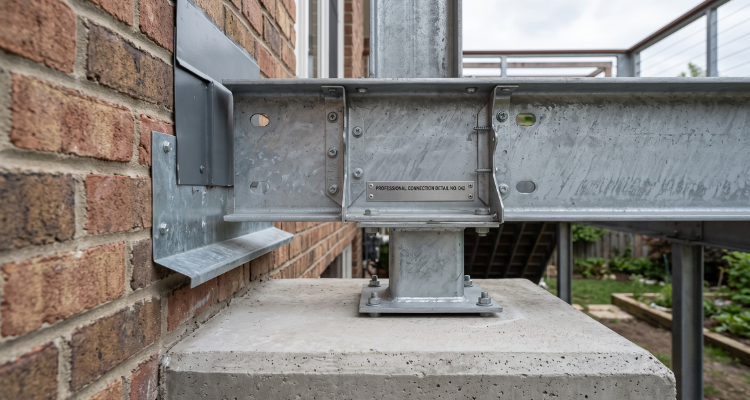
  • Footings: Frost penetration in Russell reaches depths of 1.2 metres. Deck footings must extend below this line to prevent heaving. Use concrete piers with galvanised post bases rather than burying posts directly in soil.
  • Joist hangers and fasteners: Standard zinc-coated nails corrode within three years when exposed to treated lumber. Specify stainless steel or hot-dipped galvanised connectors meeting CSA A370 standards.
  • Flashing: Where the deck ledger attaches to the house, install stepped metal flashing. This simple barrier prevents water from wicking into the wall assembly, avoiding rot that compromises both deck and dwelling.

Site Assessment and Ground Preparation

Before a single board is cut, evaluate the proposed deck location. Dig several test holes to determine soil composition. Russell properties sit atop glacial till, a heterogeneous mixture of clay, sand, and cobblestones. This material drains inconsistently. Areas with high clay content retain moisture against wooden posts, accelerating decay.

Perform a percolation test at the footing locations. Excavate a hole thirty centimetres deep, fill with water, and observe drainage. If water remains after two hours, consider installing a gravel drainage layer beneath each footing. This simple intervention extends the service life of your deck substructure by preventing standing water contact with treated wood.

Step-by-Step Construction Using Professional Landscaping Supplies

Building a durable deck follows a disciplined sequence. Rushing any step or substituting inferior materials invites premature failure.

Step 1: Design with Local Codes in Mind

Obtain a building permit from the Municipality of Russell before commencing. Deck height, railing requirements, and stair dimensions are prescribed under the Ontario Building Code. A permitted deck also protects your property insurance coverage.

Step 2: Install Footings Below Frost Line

Excavate footings to a depth of 1.2 metres. Pour concrete into sonotubes, ensuring the top sits above finished grade to direct surface runoff away from the post. Allow full curing for seven days before loading.

Step 3: Construct the Frame Using Treated Lumber

Set beams onto the post bases using 2×10 or 2×12 pressure-treated lumber. Space joists at 400 millimetres on centre for composite decking or 450 millimetres for cedar. Maintain a slight slope of one percent away from the house to shed water effectively.

Step 4: Install Decking with Gap Spacing

Fasten decking boards perpendicular to joists using two screws per bearing point. Leave a five-millimetre gap between boards to accommodate seasonal expansion and to allow debris to fall through. Stagger end joints to improve visual appeal and structural distribution.

Step 5: Apply Protective Finishes

Even treated lumber benefits from a water-repellent sealer. Apply a penetrating oil-based finish to all exposed surfaces, including board ends and cut edges. Reapply every twenty-four months for continued protection.

 wooden decks in Russell.

Seasonal Maintenance for Extended Service Life

A durable deck requires ongoing care. Inspect your wooden decks Russell each spring after snow melts. Look for raised screw heads, splitting boards, or soft spots that indicate hidden rot. Clean between deck boards using a specialised tool to remove organic debris that retains moisture. Trim vegetation around deck posts to improve air circulation.

For authoritative guidance on wood preservation and outdoor structure maintenance, refer to Natural Resources Canada, which provides research-derived recommendations for Canadian climates and wood species.

Common Errors That Undermine Deck Longevity

Avoid these frequent mistakes when constructing wooden decks in Russell:

  • Using untreated lumber for joists: Even incidental ground contact accelerates rot. All framing within 150 millimetres of grade must be pressure-treated.
  • Closing gaps between boards: Tightly fitted decking traps moisture and debris, leading to surface rot within three years.
  • Neglecting end-cut preservative: Each cut or drilled hole exposes untreated wood. Brush on copper naphthenate solution before fastening.
  • Attaching ledger boards without flashing: This common oversight causes water intrusion into house framing, resulting in costly repairs.

Why Choose Nick’s Landscaping Depot

Local expertise distinguishes a functional deck from an exceptional one. Nick’s Landscaping Depot supplies pressure-treated lumber certified to Canadian standards, stainless steel fasteners, and concrete forming tubes sized for Russell’s frost depth requirements. Staff provide site-specific advice on material quantities, footing design, and drainage solutions tailored to Eastern Ontario’s glacial till geology. Bulk pricing and scheduled delivery to any Russell address make substantial projects feasible without repeated trips to retail suppliers. The depot also stocks water-repellent sealers and maintenance tools to support your deck throughout its service life.

Conclusion

Building durable wooden decks begins with one fundamental choice. You can gamble with builder-grade lumber and uncoated fasteners, accepting premature rot and structural instability. Or you can invest in high grade landscaping supplies that work with local climate conditions to produce a safe, long-lasting outdoor space. By following proper construction techniques and sourcing materials from Nick’s Landscaping Depot, you create a deck that withstands Russell winters and rewards you with years of reliable use. Contact our team today to arrange a material consultation or delivery of premium deck-building supplies for your Russell property.

How to Stop Overpaying for Landscaping Supplies in Russell

Everybody loves the idea of a backyard upgrade until the money starts disappearing halfway through the project.

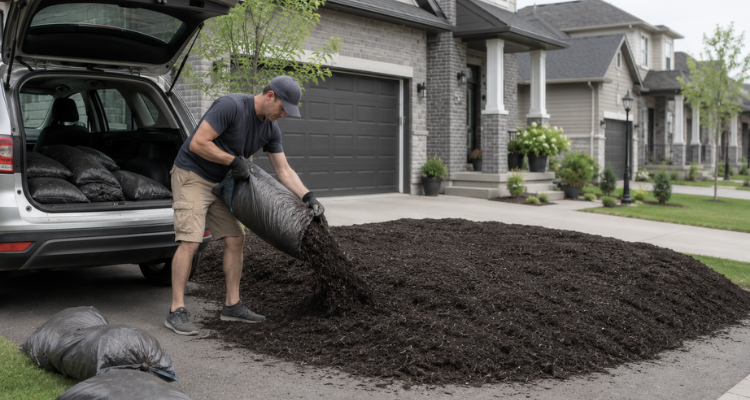
It happens all the time. Someone heads to a big-box store thinking they only need “a few bags” of soil or mulch, loads the cart up, fights with ripped plastic bags in the parking lot, crams everything into the trunk, and gets home feeling productive.

Then they spread the material around for twenty minutes and realize they barely covered anything.

Now it’s another trip back to the store. Same traffic. Same overpriced bags. Same frustration.

Honestly, that’s where a lot of homeowners around Russell start realizing the landscaping project itself isn’t the expensive part. Buying materials the wrong way is.

That’s one reason more people are skipping the retail chain routine and sourcing their landscaping supplies in Russell through local bulk suppliers instead.

Not because it sounds professional. Because it simply makes more sense once you see the numbers.

The 27-Bag Mistake Most Homeowners Don’t Realize They’re Making

Here’s the part most people never get told at the hardware store.

One cubic yard of soil or mulch is roughly the same as buying 27 standard retail bags individually.

Twenty-seven.

Most homeowners don’t realize that until they’re halfway through loading bag after bag into the trunk wondering why the project suddenly got so expensive.

And once you multiply the cost of those bags by 27, the markup becomes pretty obvious.

You’re not really paying for better material. You’re paying for plastic packaging, retail shelving, barcodes, and corporate overhead.

The bigger the project gets, the worse the math looks.

Homeowner unloading ripped

A small flower bed is one thing. But once you start dealing with side yards, lawn repairs, garden beds, grading work, or a full backyard upgrade, retail bags start becoming painfully inefficient.

And honestly, a lot of the bagged material isn’t even that great.

Some of it sits stacked outside on pallets for months. The mulch gets compressed. The soil dries out. Half the time it barely feels fresh by the time it reaches your property.

Bulk material is completely different.

It’s loose, fresher, easier to spread, and usually performs way better once it’s actually on the ground.

What Homeowners Usually Start Complaining About

  • “I thought I bought way more than this.”
  • Multiple trips back to the store
  • Bags ripping open in the driveway
  • Spending way more than expected
  • Running out of material halfway through the job

The Right Material Changes Everything

A landscaping project can look great the day it’s finished and still start causing problems a year later if the material underneath wasn’t right.

That’s usually why some lawns stay healthy through summer while others dry out constantly, or why one patio stays level while another starts shifting after a couple of Ontario winters.

A lot of newer Russell neighbourhoods are dealing with the same issue underneath the surface too. The construction soil around newer homes is often heavily compacted, which makes it harder for grass, garden beds, and even drainage to perform properly long term.

That’s why the actual material going into the project matters more than most homeowners expect once everything settles in.

1. Screened Topsoil

A lot of newer properties around Russell are sitting on hard construction clay underneath the surface. That’s usually why fresh sod struggles or certain parts of the lawn dry out faster once summer heat shows up.

Good screened topsoil helps loosen that ground properly so water can actually move through the soil instead of sitting near the surface or running off completely.

It also gives grass and garden beds a much stronger foundation long term instead of forcing homeowners into constant patch repairs every season.

2. Clean Aggregates

A patio or walkway is only as solid as the base underneath it. That’s the part most people never really see once the project is finished, but it’s usually the reason some surfaces stay level while others start shifting after winter.

Clean crushed stone helps create a stronger, more stable foundation underneath patios, sheds, and walkways while also helping water move properly through the base layer instead of collecting underneath it.

3. Premium Mulch

Mulch usually gets treated like a finishing touch, but it actually does a lot of work once the heat kicks in during summer.

A good mulch layer helps the soil hold moisture longer, slows weed growth, and protects garden beds from drying out too aggressively during long stretches of hot weather.

That’s one reason professionally maintained properties usually stay healthier and easier to manage through the middle of summer.

What the Research Shows: Research from Landscape Ontario and broader horticultural studies continues to support mulch as one of the simplest ways to help soil retain moisture and stay healthier during hotter weather conditions.

Most People Don’t Think About the Delivery Part Until It’s Too Late

A landscaping project feels pretty simple when you’re standing in the store looking at a few bags of soil or mulch.

It feels very different a couple hours later when the back of the vehicle is dirty, the suspension is squatting, and you realize you still need another load to finish the yard.

That’s usually the moment people start understanding how much material landscaping projects actually take.

And once wet soil or aggregate gets involved, the weight adds up fast.

A lot of homeowners around Russell have had that weekend where the project slowly turns into nonstop driving back and forth between the store and the house instead of actual landscaping work.

That’s why bulk delivery makes such a big difference.

The material shows up once, gets dropped where you need it, and now the project can actually move forward instead of turning into a hauling job all weekend.

For contractors, it keeps crews moving. For homeowners, it usually means less wasted time, less frustration, and no cleaning dirt out of the trunk afterward.

And honestly, once somebody uses bulk delivery for the first time, manually loading dozens of bags starts feeling like the hard way to do things.

“Most landscaping projects stop feeling small the second you start moving the material yourself.”

Build the Yard Properly the First Time

Most homeowners around Russell don’t mind spending money on the yard.

What they hate is realizing halfway through the project that they’ve already spent too much on bags that barely covered anything.

That’s where bulk supply usually starts making a lot more sense.

Nick’s Landscaping Depot supplies bulk soil, stone, mulch, and landscaping materials for homeowners who want better coverage without wasting half the budget on retail packaging and repeated store trips.

And once the material is actually in the ground, the difference usually becomes pretty obvious.

The lawn holds up better through summer. Garden beds stay healthier. Patio bases feel more solid after winter instead of shifting around a season later.

If you’re planning a yard project this season, order your bulk landscaping supplies early and get the right amount delivered before the weekend rush starts.