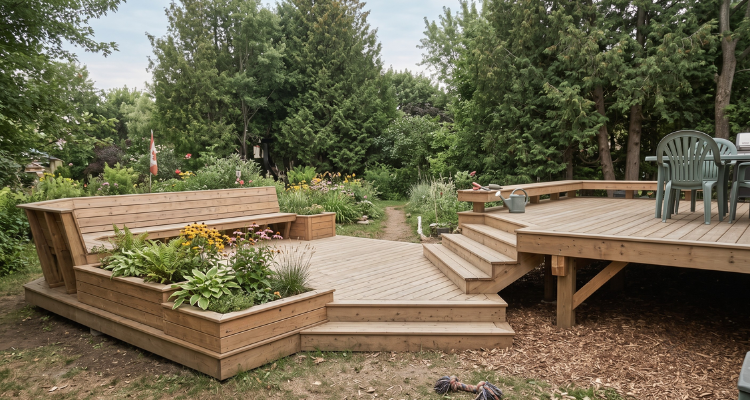
A well-constructed wooden deck transforms a property into a functional outdoor living space. For homeowners in Russell, where the climate presents freeze-thaw cycles, humid summers, and significant snow accumulation, the difference between a deck that lasts fifteen years and one that fails within five is found below the surface. Durable wood deck construction requires engineering-grade materials, an understanding of local ground conditions, and a commitment to using high grade landscaping supplies from a trusted supplier such as Nick’s Landscaping Depot.
Selecting the Correct Materials for Wooden Decks in Russell
The climate of Eastern Ontario imposes unique demands on exterior structures. Relative humidity frequently exceeds seventy percent during summer months, while winter brings prolonged ground frost. Ordinary dimensional lumber from big box retailers often arrives with excessive moisture content or inadequate treatment. For professional results, every component of your wooden decks Russell projects must be specified for ground contact and decay resistance.
Pressure-treated lumber remains the standard for structural framing. However, not all treated lumber meets the same standard. Look for lumber bearing the CSA O80 series certification, which governs preservative treatment of wood in Canada. This standard ensures the wood can withstand fungal decay and insect infestation common in the Russell area. For decking boards and railings, consider Western red cedar or thermally modified ash, both of which offer natural dimensional stability.
Critical Structural Components Frequently Overlooked
Many property owners focus exclusively on visible decking boards while neglecting the supporting elements. This approach compromises structural integrity. A durable deck requires attention to the following components:
- Footings: Frost penetration in Russell reaches depths of 1.2 metres. Deck footings must extend below this line to prevent heaving. Use concrete piers with galvanised post bases rather than burying posts directly in soil.
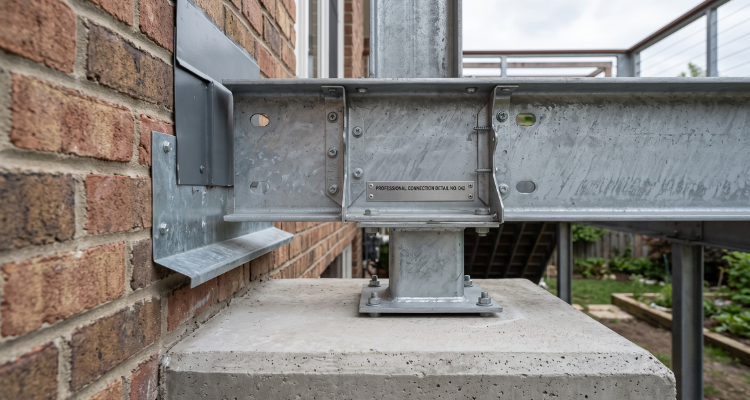
- Joist hangers and fasteners: Standard zinc-coated nails corrode within three years when exposed to treated lumber. Specify stainless steel or hot-dipped galvanised connectors meeting CSA A370 standards.
- Flashing: Where the deck ledger attaches to the house, install stepped metal flashing. This simple barrier prevents water from wicking into the wall assembly, avoiding rot that compromises both deck and dwelling.
Site Assessment and Ground Preparation
Before a single board is cut, evaluate the proposed deck location. Dig several test holes to determine soil composition. Russell properties sit atop glacial till, a heterogeneous mixture of clay, sand, and cobblestones. This material drains inconsistently. Areas with high clay content retain moisture against wooden posts, accelerating decay.
Perform a percolation test at the footing locations. Excavate a hole thirty centimetres deep, fill with water, and observe drainage. If water remains after two hours, consider installing a gravel drainage layer beneath each footing. This simple intervention extends the service life of your deck substructure by preventing standing water contact with treated wood.
Step-by-Step Construction Using Professional Landscaping Supplies
Building a durable deck follows a disciplined sequence. Rushing any step or substituting inferior materials invites premature failure.
Step 1: Design with Local Codes in Mind
Obtain a building permit from the Municipality of Russell before commencing. Deck height, railing requirements, and stair dimensions are prescribed under the Ontario Building Code. A permitted deck also protects your property insurance coverage.
Step 2: Install Footings Below Frost Line
Excavate footings to a depth of 1.2 metres. Pour concrete into sonotubes, ensuring the top sits above finished grade to direct surface runoff away from the post. Allow full curing for seven days before loading.
Step 3: Construct the Frame Using Treated Lumber
Set beams onto the post bases using 2×10 or 2×12 pressure-treated lumber. Space joists at 400 millimetres on centre for composite decking or 450 millimetres for cedar. Maintain a slight slope of one percent away from the house to shed water effectively.
Step 4: Install Decking with Gap Spacing
Fasten decking boards perpendicular to joists using two screws per bearing point. Leave a five-millimetre gap between boards to accommodate seasonal expansion and to allow debris to fall through. Stagger end joints to improve visual appeal and structural distribution.
Step 5: Apply Protective Finishes
Even treated lumber benefits from a water-repellent sealer. Apply a penetrating oil-based finish to all exposed surfaces, including board ends and cut edges. Reapply every twenty-four months for continued protection.
Seasonal Maintenance for Extended Service Life
A durable deck requires ongoing care. Inspect your wooden decks Russell each spring after snow melts. Look for raised screw heads, splitting boards, or soft spots that indicate hidden rot. Clean between deck boards using a specialised tool to remove organic debris that retains moisture. Trim vegetation around deck posts to improve air circulation.
For authoritative guidance on wood preservation and outdoor structure maintenance, refer to Natural Resources Canada, which provides research-derived recommendations for Canadian climates and wood species.
Common Errors That Undermine Deck Longevity
Avoid these frequent mistakes when constructing wooden decks in Russell:
- Using untreated lumber for joists: Even incidental ground contact accelerates rot. All framing within 150 millimetres of grade must be pressure-treated.
- Closing gaps between boards: Tightly fitted decking traps moisture and debris, leading to surface rot within three years.
- Neglecting end-cut preservative: Each cut or drilled hole exposes untreated wood. Brush on copper naphthenate solution before fastening.
- Attaching ledger boards without flashing: This common oversight causes water intrusion into house framing, resulting in costly repairs.
Why Choose Nick’s Landscaping Depot
Local expertise distinguishes a functional deck from an exceptional one. Nick’s Landscaping Depot supplies pressure-treated lumber certified to Canadian standards, stainless steel fasteners, and concrete forming tubes sized for Russell’s frost depth requirements. Staff provide site-specific advice on material quantities, footing design, and drainage solutions tailored to Eastern Ontario’s glacial till geology. Bulk pricing and scheduled delivery to any Russell address make substantial projects feasible without repeated trips to retail suppliers. The depot also stocks water-repellent sealers and maintenance tools to support your deck throughout its service life.
Conclusion
Building durable wooden decks begins with one fundamental choice. You can gamble with builder-grade lumber and uncoated fasteners, accepting premature rot and structural instability. Or you can invest in high grade landscaping supplies that work with local climate conditions to produce a safe, long-lasting outdoor space. By following proper construction techniques and sourcing materials from Nick’s Landscaping Depot, you create a deck that withstands Russell winters and rewards you with years of reliable use. Contact our team today to arrange a material consultation or delivery of premium deck-building supplies for your Russell property.