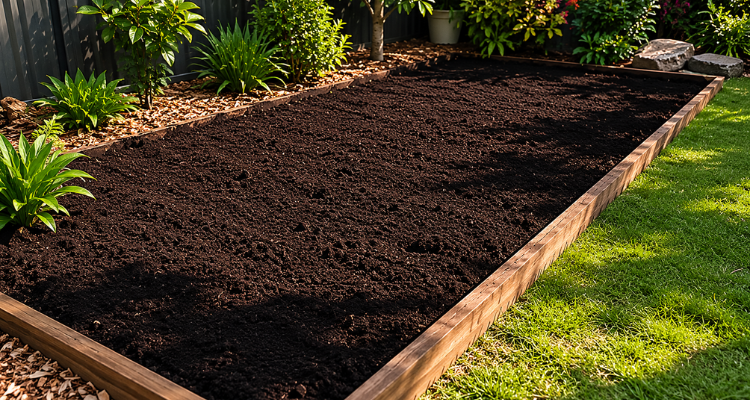
A thriving garden is not an accident. It is the result of deliberate preparation, consistent care, and above all, a deep understanding of what lies beneath the surface. For property owners in Russell, where the growing season is compressed between late frosts and humid summer heat, the condition of your garden beds determines whether your vegetables, perennials, or ornamental shrubs merely survive or genuinely flourish. The single most effective investment you can make is securing premium soil for planting from a trusted local supplier such as Nick’s Landscaping Depot.
What Constitutes Premium Soil for Planting
It is important to distinguish between generic topsoil and dedicated soil for planting. Basic topsoil serves as a landscape filler or levelling agent. It may contain variable amounts of sand, silt, clay, and minimal organic matter. Premium soil for planting, by contrast, is a refined blend engineered for active root zones. It typically includes:
- Aged compost or fully decomposed organic matter to supply slow-release nitrogen
- Coarse sand or fine perlite to maintain pore space for oxygen exchange
- A balanced loam texture that retains moisture without becoming anaerobic
- A neutral to slightly acidic pH range between 6.0 and 6.8 for most garden plants
- Active microbial colonies that assist in breaking down organic nutrients
Assessing Your Existing Garden Bed Conditions
Before applying any new material, evaluate your current garden beds. Dig down fifteen centimetres and collect a handful of soil. Squeeze it firmly. If it forms a dense, sticky ball that refuses to crumble, you have excessive clay. If it falls apart immediately and feels gritty, you have sandy soil. Neither extreme supports healthy gardens without amendment.
Perform a percolation test by digging a hole twenty centimetres deep, filling it with water, and timing the drainage. If water remains after four hours, your bed suffers from poor drainage, leading to root rot. If water vanishes in under ten minutes, your bed cannot retain moisture for plant uptake. Premium soil for planting corrects both extremes by introducing organic matter that buffers texture and optimises water behaviour.
Step-by-Step Guide to Feeding Your Garden Beds
Proper bed preparation with high-grade soil for planting follows a methodical process. Do not rush these steps.
Step 1: Remove Existing Debris and Weeds
Clear the bed of all perennial weed roots, old mulch, stones larger than three centimetres, and any plant residue from previous seasons. Do not simply till weeds into the ground. Many Russell gardens contend with bindweed, quack grass, and thistle. These require manual removal.
Step 2: Loosen the Existing Subgrade
Using a garden fork or a mechanical tiller set to shallow depth, break up the native soil to a depth of fifteen centimetres. This fracture zone prevents the creation of a hard pan boundary between your new soil for planting and the original ground. Roots must be able to transition between layers without stress.
Step 3: Calculate Your Volume Requirements
For most vegetable and flower beds, a ten to fifteen centimetre layer of premium soil for planting is sufficient. For root vegetables such as carrots or potatoes, increase depth to twenty-five centimetres. Measure length by width by desired depth in metres to determine cubic metres. Ordering from Nick’s Landscaping Depot in bulk quantities above one cubic metre proves far more economical than retail bags.
Step 4: Apply and Mix a Transition Layer
Spread a five centimetre layer of soil for planting over the loosened native ground. Lightly incorporate this layer into the top five centimetres of existing soil using a rake or tiller. This blending zone encourages roots to penetrate deeper and reduces moisture stress during dry spells.
Step 5: Add the Final Growing Layer
Distribute the remaining soil for planting evenly across the bed. Rake to a consistent depth without over-working the surface. Over-raking breaks down soil aggregates and can cause surface crusting, which impedes seedling emergence.
Step 6: Settle and Moisturise Before Planting
Water the bed thoroughly using a gentle shower setting. Allow two to three days for natural settlement. Add small amounts of additional material to any depressions. Your bed is now ready for direct seeding or transplanting. Avoid walking on the finished surface to preserve pore space.
Long-Term Maintenance of Planting Beds
Even the finest soil for planting requires stewardship. Each growing season depletes organic matter and nutrients. Replenish your beds annually with a two to three centimetre top-dressing of compost or fresh planting mix. Rotate crop families each year to prevent pathogen build-up. Mulch exposed soil surfaces with straw, shredded leaves, or untreated wood chips to moderate soil temperature and suppress weeds.
For guidance on seasonal land management and sustainable gardening practices in Eastern Ontario, consult Agriculture and Agri-Food Canada, which provides research-based recommendations for soil health and crop rotation tailored to Canadian climates.
Common Errors That Undermine Your Soil Investment
Avoid these frequent mistakes when using soil for planting in Russell gardens:
- Mixing unamended clay into your new soil: This reverses texture improvements and recreates drainage problems.
- Planting immediately after application without settlement: Loose soil shifts around roots, creating air pockets that desiccate tender roots.
- Using garden soil in containers: Soil for planting intended for ground beds is too dense for pots. Use container-specific mixes for planters.
- Neglecting annual pH testing: Russell’s natural water and decomposing organic matter can shift pH over time. Test every two years.
Why Choose Nick’s Landscaping Depot for Your Soil for Planting
Local knowledge matters. Nick’s Landscaping Depot sources and blends materials specifically for Eastern Ontario’s climate and geology. Their premium soil for planting undergoes screening to remove debris and weed seeds. Staff members provide honest guidance on volume calculations, delivery scheduling, and custom blends for vegetable gardens, perennial borders, or raised beds. Bulk pricing and flexible delivery to Russell addresses make large projects feasible without unnecessary trips to big-box retailers.
Conclusion
Feeding your garden beds begins with a fundamental choice. You can struggle against poor native soil, applying synthetic fertilisers as temporary bandages, or you can invest in premium soil for planting that works with nature to support robust growth. By following proper preparation techniques and sourcing materials from Nick’s Landscaping Depot, you create a living root zone that rewards you with higher yields, more vibrant flowers, and fewer maintenance headaches. Contact us today to arrange delivery of professional-grade soil for planting and give your Russell garden the foundation it deserves.